Faculty of Development Social Service in Beni Suef organizes an awareness seminar on "Information Security Awareness" to protect students from cyberattacks
1 Dec 2025
Media Center
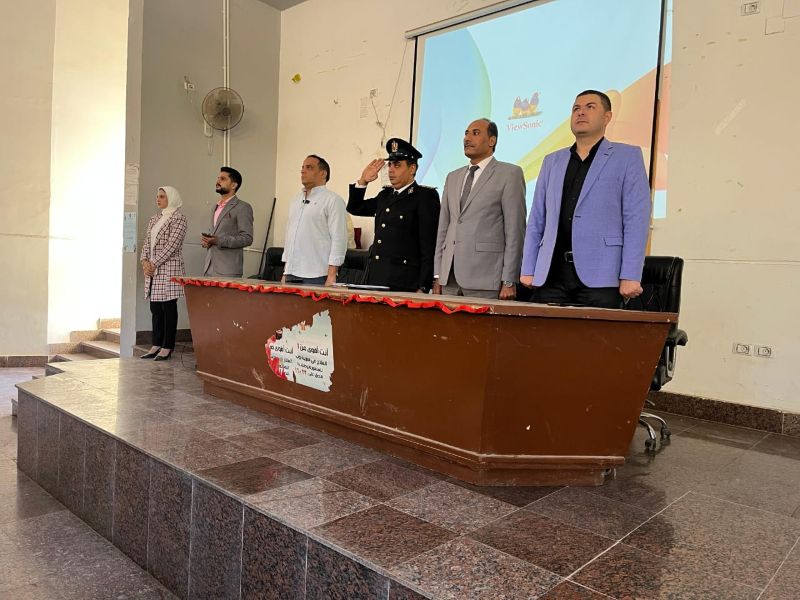
Under the patronage of Dr. Tarek Ali, Acting President of Beni Suef University, the Faculty of Development Social Service, in cooperation with the “Students for Egypt” family, organized an awareness seminar on “Information Security Awareness” under the supervision of Dr. Abu Al-Hassan Abdel-Mawjoud, Vice President of the University for Community Service and Environmental Development Affairs, and Dr. Hindawi Abdel-Lahi Hassan, Dean of the Faculty, and prepared and implemented by Dr. Mohamed Saad El-Sherbiny, Vice Dean of the Faculty for Community Service and Environmental Development Affairs, Dr. Hanan Ashri Abdel-Hafiz, Head of the Department of Working with Groups, and Dr. Marwa Sayed Gabr, Director of the Sustainable Development Unit at the Faculty. This took place in the presence of Colonel Mohamed Gamal Abdel-Ghaffar, Head of the Information Technology Department at the Beni Suef Governorate Security Directorate.
Dr. Tariq Ali explained that this seminar is part of the university's strategy to empower youth and protect its academic community. He noted that the seminar primarily aimed to raise awareness among university students about the importance of information security, how to protect personal data, and how to adopt safe browsing practices when using various websites and applications. The university president also emphasized the pivotal role these activities play in strengthening the students' own community role, as the university strives to empower them to spread this awareness and apply cybersecurity principles not only in their university life but in all aspects of their daily lives.
The university president noted that the seminar focused on how to deal with common cyber threats facing university students, such as phishing, the risks of account compromise due to weak or reused passwords, and the dangers of phishing via text messages and applications. The event also emphasized key online safety practices, including choosing strong passwords, enabling two-factor authentication, regularly updating software and systems, and carefully managing privacy settings and personal data. In conclusion, Dr. Tariq Ali stressed the importance of being wary of suspicious links and files, protecting university and personal data, storing sensitive information in a secure location, and using public devices responsibly.